
The Hand Tools Every Beginner Should Own
Walk into a hardware store and the choice can feel endless. In reality, a short list of quality hand tools covers the vast majority of home repairs and small projects. Buy the basics first, and add specialist tools only when a job calls for them.
The essentials
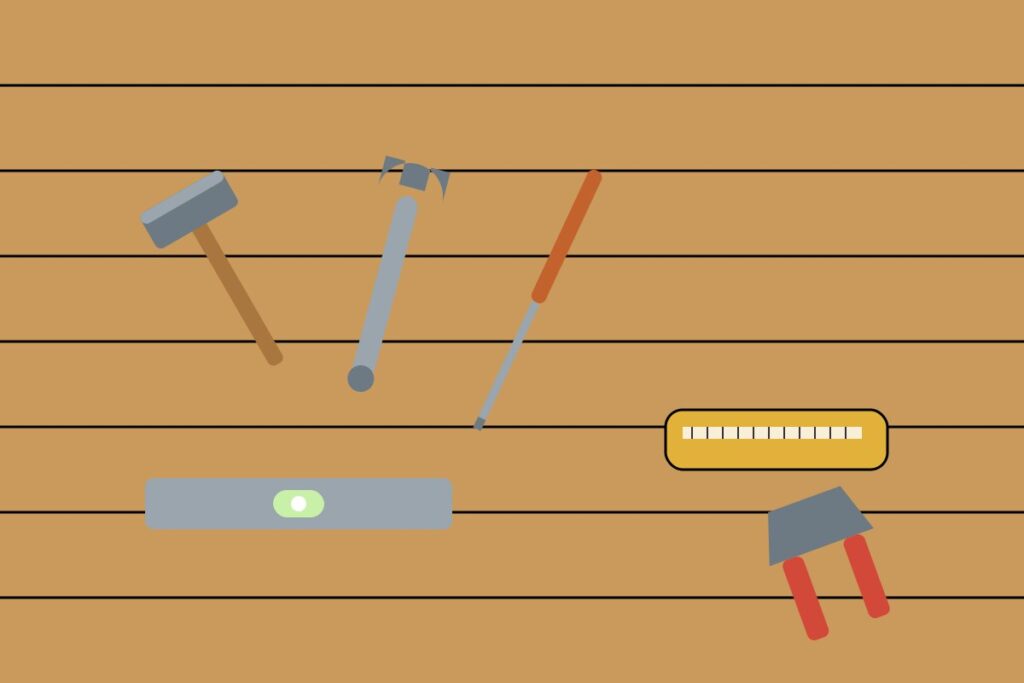
- Claw hammer. For driving and pulling nails. A weight of around 450 grams (16 ounces) suits most jobs.
- Screwdrivers. A set of flat and Phillips drivers in several sizes, or one with interchangeable bits.
- Tape measure. A 5-metre (16-foot) tape with a locking blade is a good general choice.
- Spirit level. For hanging shelves and building anything that needs to be straight.
- Adjustable wrench and pliers. For nuts, bolts, and gripping small items.
- Utility knife. With spare blades, for cutting, scoring, and trimming.
- Hand saw. A general-purpose saw for cutting timber.
Useful additions
- Stud finder, to locate studs and avoid pipes or wires.
- Cordless drill and driver, the most useful power tool for most households.
- Clamps, to hold work steady.
- Safety glasses, work gloves, and a dust mask.
- A small flashlight or headlamp.
Buy quality where it counts
It is worth spending a little more on tools you will use often, such as a hammer, tape measure, and level, because cheap ones can be inaccurate or break quickly. For tools you will only use once, borrow or rent instead.
Look after them
- Keep tools dry and clean, and wipe metal parts with a light coat of oil if rust is an issue.
- Store them in a toolbox or on a wall rack so you can find them.
- Replace blades as soon as they are dull, since dull blades are more dangerous.
Learn as you go
The best way to learn is to start with small jobs, such as hanging a picture, tightening a loose hinge, or assembling furniture. Each project teaches you something and shows you what to buy next.
A modest, well-chosen toolkit will do more for you than a garage full of rarely used gadgets.