
Drainage Problems in the Yard: Signs and Solutions
Water that does not drain away is more than a nuisance. It drowns plants, breeds mosquitoes, makes the ground boggy, and can cause trouble near the foundation of a house. Fortunately, many drainage problems have simple fixes, and the key is to understand where the water is coming from.
Signs of poor drainage
- Puddles that stay for more than a day or two after rain.
- Soggy lawn areas, moss, or yellowing grass.
- Water pooling near the foundation.
- Erosion channels or exposed roots.
- Damp or musty smells in the basement.
Start with the simple fixes
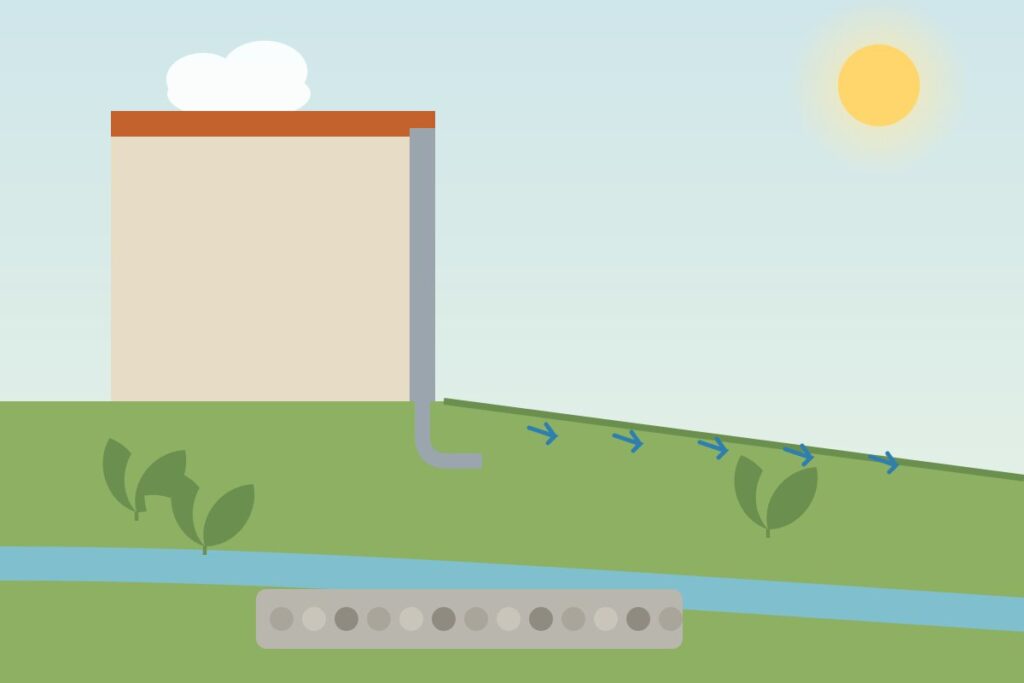
Check your gutters and downspouts first. They should be clear and should discharge water well away from the house, commonly at least 1.8 to 3 metres (6 to 10 feet). Extensions or splash blocks cost little and often solve the problem.
Check the grade
The ground next to a house should slope away from the walls. A commonly recommended slope is about 15 centimetres over the first three metres (6 inches over 10 feet), though this depends on local conditions. Add soil to low areas near the foundation and compact it, and make sure it does not block the vents or siding.
Bigger solutions
- Swales. Shallow, gently sloping channels that guide water to a safe place.
- French drains. A gravel-filled trench with a perforated pipe that carries water away.
- Dry wells. Underground pits that collect water and let it soak into the ground.
- Rain gardens. Planted hollows that soak up runoff and filter it.
Improve the soil
Heavy clay drains slowly. Adding compost over time improves soil structure, and deep-rooted plants help to open it up. Avoid compacting wet soil.
When to call a professional
Water entering the basement, cracks in the foundation, or a large site with complicated slopes are jobs for an experienced contractor or engineer. Local rules may also apply to where you can send water.
Look at where the water comes from before you dig, and start with the easiest fix first.