
How to Plan a Low-Maintenance Backyard
Most backyard work comes from decisions made at the start: too much lawn, plants in the wrong place, and beds that are hard to reach. A little planning up front can cut your maintenance dramatically while still giving you a yard you enjoy.
Start with how you use the space
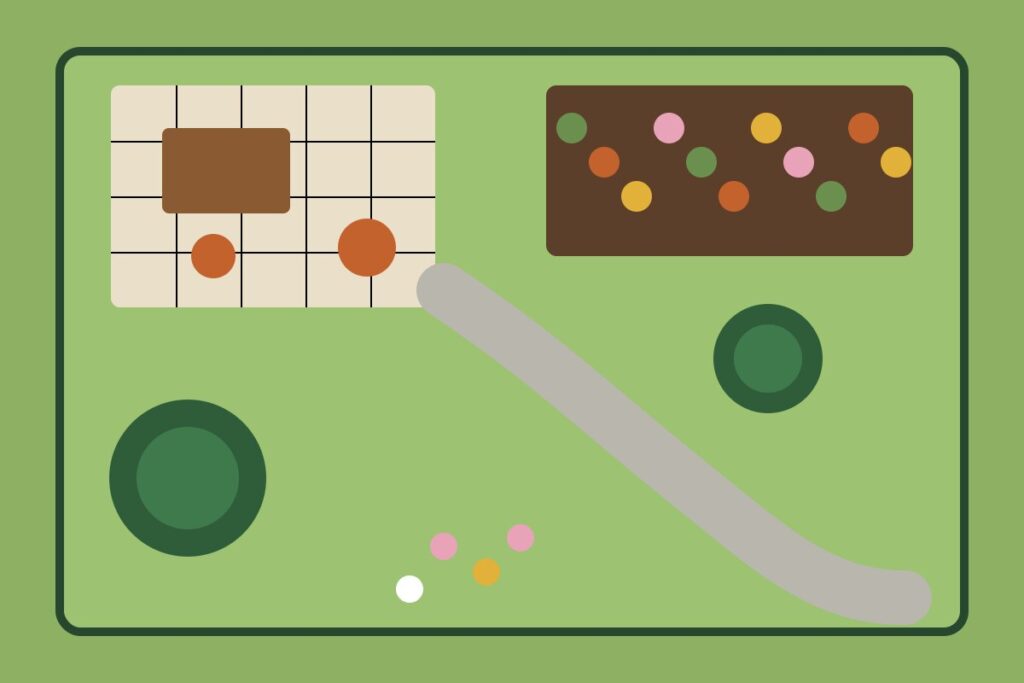
List what you want: a place to sit, a play area, a vegetable patch, privacy. Sketch the yard on paper, even roughly, and mark where the sun falls through the day. Group activities into zones so each area has a clear purpose.
Reduce high-maintenance features
- Lawn. Grass needs mowing, watering, and feeding. Reduce its size or replace parts with beds, gravel, or hard surfaces.
- Awkward edges. Simple curves and straight lines are easier to mow and trim.
- Fussy plants. Choose plants that suit your climate, soil, and light without constant care.
Choose the right plants
Check the mature size of every tree and shrub before you plant it, because many are planted too close to buildings or to each other. Plants native to your region often need less water and fewer treatments. Group plants with similar needs together.
Cover the soil
Bare soil invites weeds. Use ground covers, dense planting, and a layer of mulch to keep weeds down and conserve moisture. A neat mulch layer also gives beds a finished look.
Make watering easier
A drip irrigation line or soaker hose on a timer can look after beds with very little effort and uses water more efficiently than a sprinkler.
Plan paths and edges
A firm path lets you reach every part of the garden in any weather. Install edging between lawn and beds to stop grass from creeping in.
Build in stages
You do not have to finish everything at once. Start with the structure, such as paths, patio, and main trees, and add the planting over a couple of seasons.
A low-maintenance yard is a matter of good design, not of doing less. Plan it well, and you will spend more time enjoying it.