
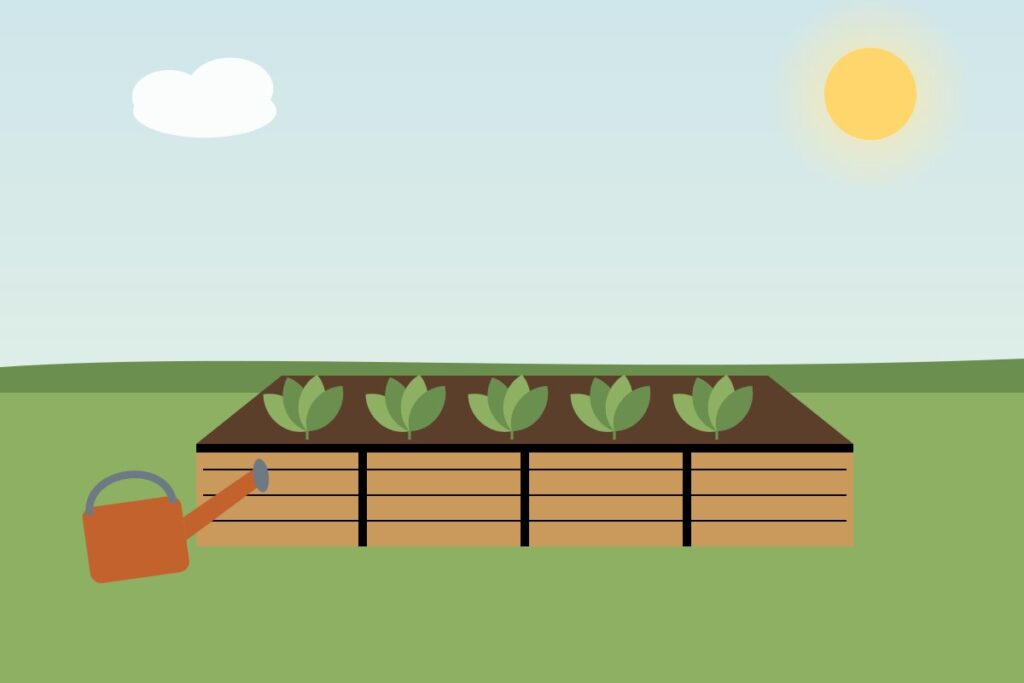
How to Build a Raised Garden Bed
Raised beds are popular for good reasons. You control the soil, drainage is usually better, and you do not have to bend as far. They also make a garden look organised. Building one is a simple weekend project.
Size and shape
Keep the bed no wider than about 1.2 metres (4 feet), so you can reach the centre from either side without stepping on the soil. Length is up to you. A height of 20 to 30 centimetres works for most vegetables, and deeper is better for root crops.
Choose your wood
Cedar and other naturally rot-resistant woods last a long time but cost more. Standard pine is cheaper and will rot sooner. Pressure-treated lumber is used by many gardeners, and modern formulations are generally regarded as acceptable for garden beds by many extension services, but if you want to be cautious, choose untreated wood or line the inside with a barrier. Avoid old railway sleepers or wood treated with creosote.
Basic build
- Mark out the position and level the ground.
- Cut boards to length and screw the corners together using corner posts or brackets.
- Check the frame is square by measuring both diagonals. They should match.
- Place the frame on the level ground and press it in slightly.
- Lay cardboard on the grass or weeds inside to suppress them, if you are building on a lawn.
Fill with a good mix
A popular blend is about half good topsoil and half compost, which you can adjust to suit your plants. Buying in bulk is often cheaper than bags. Water the soil as you fill and top it up after it settles.
Tips
- Put the bed where it will get six or more hours of sun.
- Add a path wide enough for a wheelbarrow.
- Consider a hardware cloth layer underneath if burrowing animals are a problem in your area.
Once built, the bed will give you years of easy growing.